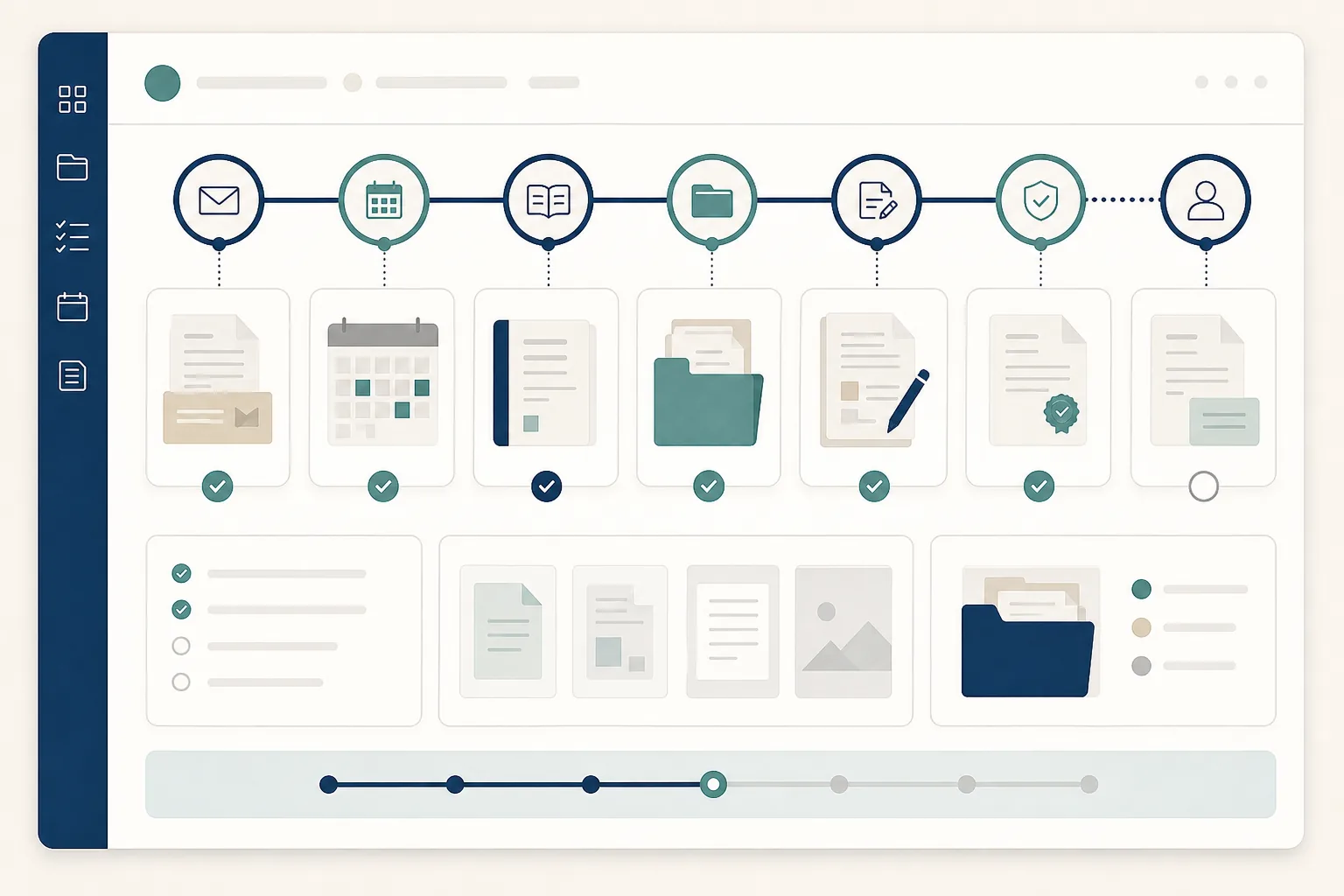
University Academic Appeal Timeline Guide (Australia)

This guide is for students who need to move quickly after an adverse academic decision without turning the submission into a rushed, under-evidenced draft. The exact deadline always depends on your university's own policy, but the workflow below is usually the safest way to protect your position.

Quick answer

If you have just received an exclusion notice, failed result decision, refusal of late withdrawal, misconduct outcome, or another academic decision, do not start with elegant wording. Start with the deadline, the correct process, the decision notice, and the policy source. Most avoidable damage happens when students draft too early, gather evidence too late, or realise near the deadline that they were using the wrong pathway.

Use this page when you need to know

  • what to do in the first 24 hours after a university decision
  • how to divide the first week between evidence gathering and drafting
  • what to leave until the final filing stage, and what not to leave
  • how appeal, show cause, misconduct, and late-withdrawal timing pressures differ

What to do in the first 24 hours

1. Confirm the exact process name

Do not assume everything is an appeal. The notice may actually be inviting a show cause response, an initial response to allegations, an internal review request, or a late withdrawal application. The label matters because the grounds, form, and deadline may all change with the process.

2. Lock down the deadline immediately

Save the due date exactly as the university states it and check whether it is counted in calendar days, working days, or business days. If the notice refers you to a policy, read that section too. Students often rely on an email summary and miss a stricter timing rule in the procedure itself.

3. Preserve the decision record

Download the decision letter, save portal screenshots, and preserve any linked attachments, emails, or assessment feedback. If the portal view changes later, your own saved copy may become the clearest evidence of what was communicated and when.

4. Pull the current policy version

The safest source order is the notice first, then the current official policy, then the form instructions. Do not build your timeline around another student's story, an old faculty page, or a forum summary that may no longer match the active rules.

Direct answer

In the first day, your job is not to write beautifully. It is to stop the file from becoming disorganised. Once the process, deadline, and source documents are clear, the rest of the timeline becomes much safer.

Days 2 to 4, identify the real argument before you write too much

Clarify the review ground

Ask what you are actually trying to prove. Is the issue procedural unfairness, new evidence, disproportionate penalty, special circumstances, or a mistake in applying the policy? The wording should come from the university rule, not from a generic fairness instinct.

Build a dated chronology

Create a dated sequence of events before you draft full paragraphs. That chronology should show when the problem started, what academic effect followed, what support you sought, what the university knew, and what decision was made.

List the evidence gaps

By this point you should know what documents you already have, what still needs to be requested, and what claims will be hard to prove unless the file becomes more specific. This is often where a case becomes clearer or weaker very quickly.

Practical rule

If you cannot explain in one sentence what the decision-maker is allowed to change and why the policy allows that result, you are probably drafting too early.

Week 1, build the evidence pack and structure at the same time

Decision and policy documents

Keep the notice, assessment feedback, warning letters, progression emails, prior requests, and policy extracts together in one folder. These documents often determine what can be argued before any supporting evidence is even considered.

Medical and wellbeing material

If health is part of the case, aim for evidence that addresses timing, functional impact, and relevance to study. Generic certificates may not do enough if they do not connect the condition to the exact disputed period or explain how study was affected.

University communications

Save coordinator emails, extension discussions, learning support messages, counsellor contact records, and any response from the university that helps prove notice, delay, disclosure, or attempts to seek help at the time.

Explanation notes for each attachment

Do not just collect documents. Add a short note beside each one explaining what it proves. That makes the later drafting stage much easier because the evidence is already tied to the argument rather than dumped at the end.

Best use of the first week

The first week usually works best when evidence collection and structure happen together. If you leave the structure until later, you often collect too much irrelevant material. If you leave the evidence until later, the draft becomes a statement of belief rather than a supported submission.

Drafting window, usually after the basics are organised

Start with headings linked to the process

Structure the draft around the actual review ground, response criteria, or policy questions. This is usually safer than opening with a long personal story. A good draft helps the decision-maker follow both the rule and the evidence without guessing how they connect.

Separate chronology from argument

Students often produce muddled drafts because the timeline, emotional context, and legal or policy ground are all mixed together. It is usually clearer to explain what happened first, then what the policy requires, then how the documents satisfy that requirement.

Check whether the remedy matches the stage

Ask for a result the decision-maker can actually grant at that step. Some processes allow reconsideration or remission. Others only allow a review of a specific decision, a response to allegations, or a recommendation about penalty or continuation.

Review for gaps before polishing language

At this stage, the highest-value edit is usually not better prose. It is checking whether each major claim has a document, whether the dates line up, and whether the argument still matches the official process.

Safer drafting order

Ground first, chronology second, evidence map third, final wording last. That order tends to produce a stronger submission than writing a persuasive opening and hoping the structure will sort itself out later.

Final 48 hours before filing

Check the filing channel

Make sure you know whether the university requires a portal upload, email, form submission, or supporting attachment naming convention. Filing through the wrong channel can create avoidable disputes even if the document itself is strong.

Cross-check the attachments

Match each attachment to a sentence in the draft or an evidence list. If you have a key medical record, timeline, or decision notice, it should not be left floating in the pack without explanation.

Save proof of lodgement

Keep the portal confirmation, sent email, timestamp, and final PDF or submission copy. If there is later confusion about whether the material was filed on time, this proof can matter a lot.

Do not create a last-minute credibility problem

The final days are the worst time to insert new facts casually, upload inconsistent versions, or rely on documents you have not actually checked. Last-minute filing is where avoidable contradictions often appear.

Short rule

By the final 48 hours, the goal is controlled filing, not discovery. If you are still deciding what the process is or what your main ground is, the timeline has already become riskier than it needed to be.

After lodgement, keep the record tidy

Preserve the final bundle

Save the submitted version exactly as filed, including attachments and file names. If you later need to explain what was sent, memory is a poor substitute for the actual lodged pack.

Track follow-up requests

If the university asks for clarification or extra documents, treat those requests as part of the same timeline. Delays after lodgement can still weaken the file if they create the impression that the evidence was not ready or coherent.

Watch for the next stage

Some matters move from response stage to outcome stage, or from internal review to a later complaint or escalation pathway. Keep noting dates, because the second deadline can arrive quickly after the first result.

How the timeline changes by matter type

Academic appeal or result review

These matters often turn on a short deadline, a limited list of review grounds, and whether the student can identify what the original decision-maker got wrong. The timeline should focus early on the notice, grounds, and decision record.

Related service page

Show cause response

The timing here usually revolves around explanation plus future plan. It is not only about what went wrong, but what has changed now to make continuation realistic. That means recovery planning should start early, not just at the end.

Related show cause page

Academic misconduct matter

Misconduct timelines can be especially sensitive because the early choice between admitting, explaining, or disputing the allegation may shape the rest of the process. Students usually need the allegation material, policy wording, and chronology organised before they start substantive admissions or denials.

Related misconduct page

Late withdrawal or fee remission

These cases often need more evidence-gathering time because the file may depend on medical, financial, or chronology proof across a semester. The timeline should still begin early because the key problem is usually proving why successful completion became impracticable, not simply proving that the semester was hard.

Related late withdrawal page

Common timing mistakes that make a case weaker

Spending three days on opening wording

Students sometimes draft the introduction again and again while the actual deadline, policy, and supporting evidence remain unconfirmed. That feels productive, but it usually delays the work that matters more.

Assuming more documents can be added later

Some universities allow supplementary material, some do not, and some accept it only in limited circumstances. Always confirm the rule instead of assuming the timeline is flexible.

Treating all processes as interchangeable

An appeal, a review, a show cause response, and an initial misconduct response can look similar emotionally but function differently procedurally. Using the wrong framework early can waste most of the available time.

Leaving the submission proof until after the deadline

If you cannot prove what was lodged and when, a later dispute becomes harder to solve. Submission confirmation is part of the case file, not an administrative afterthought.